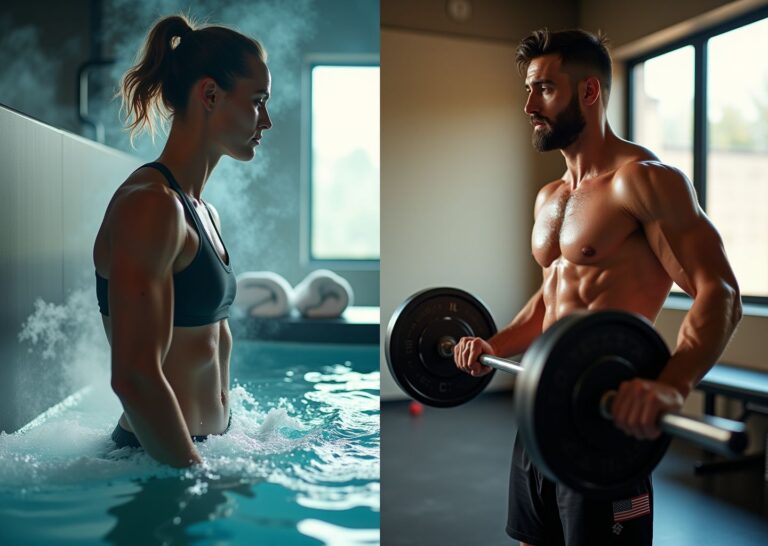
Cold exposure is a powerful, low‑cost tool for boosting alertness, mood, and recovery when used correctly. This article explores the Huberman protocol and related evidence to explain how ice baths, cold plunges, and cryotherapy affect dopamine and performance, with step‑by‑step temperatures, timing, contrast options, safety rules, and sport‑specific recommendations.
How Cold Exposure Affects Dopamine and Performance
The physiological response to cold water immersion begins the moment your skin makes contact with the water. This process is driven by the sympathetic nervous system and the immediate activation of peripheral cold receptors. These receptors send rapid signals to the brain through the somatosensory pathways, triggering a significant release of catecholamines, including norepinephrine and epinephrine. These chemicals are responsible for the initial cold shock response. You feel an immediate increase in heart rate and a shift in breathing patterns—the body preparing for a perceived threat. Research has shown that even a brief exposure to very cold water can cause a sharp spike in epinephrine, leading to an instant state of high alertness and arousal. This surge is not just a mental state; it is a measurable change in your internal chemistry.
The Dopamine Wave and Temporal Dynamics
The most significant aspect of the Huberman protocol is how cold exposure influences dopamine. Unlike the rapid spikes and subsequent crashes associated with stimulants, the dopamine increase from cold exposure is gradual and sustained. A landmark study by Srámek and colleagues (2000), published in the European Journal of Applied Physiology, documented this effect. They found that immersion in water at 14°C (57°F) resulted in a 250 percent increase in plasma dopamine levels. This rise does not happen instantly; it builds during the exposure and continues to climb after you exit the water. The study also noted a 530 percent increase in norepinephrine. Andrew Huberman highlights this in his podcast Using Deliberate Cold Exposure for Health and Performance, explaining that these elevated levels can persist for several hours. This creates a long window of heightened motivation and focus, which is why many people report feeling a sense of calm and clarity for the entire morning after a cold plunge.
Mechanisms of Neurotransmitter Release
The release of these neuromodulators is tied to the activation of the locus coeruleus, a small area in the brainstem that serves as the primary source of norepinephrine for the brain. When you enter the cold, the sensory input forces the locus coeruleus to increase its firing rate, increasing arousal and sharpening attention. While peripheral dopamine increases significantly, it does not cross the blood-brain barrier directly; however, the systemic increase in catecholamines reflects a global activation of the arousal systems. This correlates with subjective improvements in mood and a reduction in perceived pain. The cold also triggers the release of endorphins in some individuals, contributing to the post-exposure “high.” This chemical cocktail works together to improve vigilance and cognitive task performance for hours after the session.
Brown Adipose Tissue and Metabolic Hormesis
Beyond the brain, cold exposure has a profound effect on metabolism through brown adipose tissue (BAT), often called brown fat. Unlike white fat which stores energy, brown fat burns energy to produce heat through thermogenesis. Repeated cold exposure helps recruit and activate BAT. A study by Blondin et al. (2014) in the Journal of Clinical Investigation showed that cold activates these cells through norepinephrine signaling acting on beta-3 adrenergic receptors. This is a form of hormesis—a biological phenomenon where a low dose of a stressor induces an adaptive response that makes the body more resilient. Regular cold exposure essentially trains your body to become more efficient at regulating its own temperature, potentially leading to improvements in metabolic health and insulin sensitivity over time.
Immune Signaling and Inflammation
The impact of cold on the immune system is another critical piece of the puzzle. In 2014, a study by Kox and colleagues published in PNAS examined the Wim Hof method. They found that subjects who combined cold exposure with specific breathing techniques could voluntarily influence their innate immune response. When exposed to an experimental endotoxin, these subjects showed a significant reduction in pro-inflammatory cytokines such as IL-6 and TNF-alpha, and higher levels of the anti-inflammatory cytokine IL-10. This suggests that cold exposure can help modulate the immune system and reduce systemic inflammation. A 2024 systematic review titled Effects of cold-water immersion on health and wellbeing confirms these findings, suggesting that the effects are time-dependent and can improve overall quality of life by managing the body’s stress response.
Timing and Training Outcomes
Understanding the timing of cold exposure is vital for optimizing performance. For those seeking cognitive benefits and motivation, morning exposure is ideal as it aligns with the natural rise in cortisol and sets a high baseline for dopamine. However, the timing relative to exercise is complex. Research by Roberts et al. (2015) published in the Journal of Physiology found that cold water immersion immediately after resistance training can blunt muscle hypertrophy by reducing the activation of the mTOR pathway, which is essential for muscle protein synthesis. Peake et al. (2017) further found that while cold reduces soreness, it may interfere with the long-term adaptations needed for strength gains. If your goal is building muscle, you should delay the cold for at least four to six hours after your workout. For endurance athletes, immediate cold can help with recovery and reduce the perception of fatigue without the same negative impact on performance.
Practical Implications for Habit Formation
The acute increase in dopamine can be a powerful tool for habit formation and learning. Because dopamine is the primary driver of motivation and the reward system, the post-exposure window is a prime time for focused work. Huberman suggests pairing the cold with a difficult task to help encode the motivation for that task, as the brain associates the high dopamine state with the activity. Short, intense exposures are best for a quick adrenaline hit, while longer, moderate exposures are better for the sustained dopamine rise. Whether you need to crush a morning writing session or recover from a long run, the physiological shifts triggered by the cold provide a reliable chemical advantage.
Practical Protocols: Temperatures, Timing, and Contrast Therapy
Building a sustainable practice for cold exposure requires a shift from seeing it as a test of will to viewing it as a precise tool for neurochemical management. The core of the Huberman protocol rests on a cumulative weekly target of 11 minutes. This total is spread across two to four sessions. This duration is sufficient to trigger brown adipose tissue thermogenesis and maintain elevated baseline dopamine. You do not need to stay in the water for long periods to see results. Shorter sessions at lower temperatures often provide a more significant adrenaline spike than longer sessions in milder water.
Protocols for Dopamine and Mental Alertness
Acute Dopamine Protocol
To maximize the 250 percent increase in dopamine reported in studies like Srámek et al. (2000), aim for water temperatures between 10°C and 15°C (50°F to 59°F). Submerge yourself up to the neck for 1 to 5 minutes. This protocol works best in the morning or before tasks that require high focus. The effects on mood and motivation can last for 3 to 6 hours. If you use colder water around 5°C (41°F), you can reduce the time to 30 or 60 seconds. This creates a sharp rise in epinephrine and immediate alertness. Focus on slow and controlled exhalations to manage the initial cold shock, training the top-down control of your nervous system.
Recovery Protocols for Different Athletes
Endurance Recovery
Runners and cyclists benefit from immediate immersion after long training sessions. Use a temperature range of 10°C to 12°C (50°F to 53.6°F) for 10 to 15 minutes. This helps reduce perceived muscle soreness and fatigue and assists in clearing metabolic byproducts. Systematic reviews in 2024 suggest this timing is ideal for athletes who need to perform again within 24 hours. Full immersion is recommended to address systemic inflammation.
Strength and Hypertrophy Considerations
Strength athletes must be cautious with the timing of cold plunges. Research from 2015 to 2017 shows that cold water immersion immediately after resistance training can blunt the mTOR signaling pathway, which is essential for muscle protein synthesis and hypertrophy. If your primary goal is building muscle mass, you should delay cold exposure for at least 6 hours after your workout. Some experts suggest waiting until the following day to allow the natural inflammatory response required for muscle growth to occur without interference. On rest days, cold exposure remains a valuable tool for these athletes to manage systemic stress without affecting gains.
Contrast Therapy and Circulatory Health
Contrast Cycles
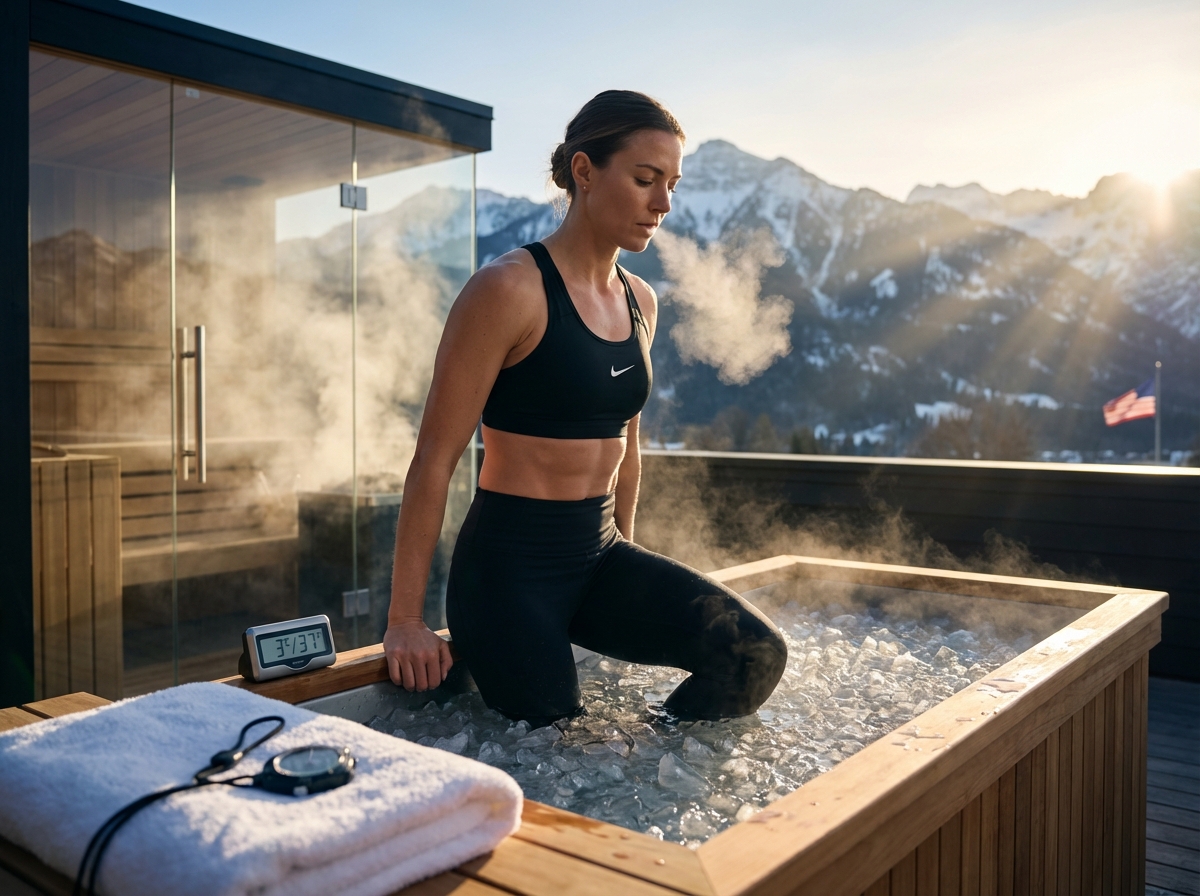
Contrast therapy involves alternating between extreme heat and cold. This protocol is highly effective for improving peripheral circulation and subjective recovery. Use a sauna at 80°C to 95°C (176°F to 203°F) for 10 to 15 minutes. Follow this with a cold plunge at 10°C to 15°C (50°F to 59°F) for 1 to 3 minutes. Repeat this cycle 3 to 5 times. Team athletes often use this routine 24 to 48 hours after a game to restore autonomic balance. Always end on the cold side if you want to stay alert; end on the hot side if you want to promote relaxation before sleep.
Acclimation and Progression Plan
The 8-Week Build
Do not start with ice-cold water if you are a beginner. Start with water at 15°C (60°F) for 30 to 60 seconds. Perform this three times per week. Every two weeks, decrease the temperature by 1 or 2 degrees, or increase the duration by 30 seconds. By week 8, you should be able to handle 3 minutes at 10°C (50°F) with a calm heart rate. Use the mammalian diving reflex by splashing cold water on your face before entering the tub; this activates the vagus nerve and slows the heart rate, making the transition into the water easier.
Practical Weekly Templates
Two-Week Starter Plan
Week 1: Three sessions of 2 minutes at 15°C (59°F). Focus on nasal breathing.
Week 2: Three sessions of 3 minutes at 13°C (55.4°F). Practice staying still in the water to allow a thermal layer to form.
Sport-Specific Weekly Routine
| Athlete Type | Frequency | Timing | Protocol |
|---|---|---|---|
| Weightlifters | 2x per week | Rest days only | 3 mins at 10°C (50°F) |
| Runners | 3x per week | Post-long run | 12 mins at 12°C (53.6°F) |
| Team Sports | 4x per week | Post-game/Practice | Contrast cycles (3 rounds) |
Morning Dopamine Protocol
Perform this within 60 minutes of waking up. Start with 2 minutes of paced diaphragmatic breathing. Submerge to the neck in 11°C (52°F) water for 2 minutes. Keep your hands and feet in the water for maximum effect. Upon exiting, stand still for 1 minute before drying off to allow your body to thermoregulate naturally. This protocol aligns with recommendations found in The Science & Use of Cold Exposure for sustained mental clarity. You can expect the peak of alertness to hit about 30 minutes after you dry off.
Adaptations for Traveling Athletes
Athletes who travel can maintain their protocol using cold showers or ice packs. A cold shower at the maximum setting for three minutes can still trigger a significant norepinephrine response. While not as potent as a full plunge, it prevents the loss of cold adaptation. Some athletes use hotel bathtubs filled with cold water and bags of ice from the hotel machines. Use a two-minute cold shower as a maintenance tool when a plunge tub is unavailable.
Safety Equipment, Monitoring, and Special Considerations
Deliberate cold exposure is a powerful physiological stressor. It requires a serious approach to safety before you ever touch the water. Certain medical conditions make cold immersion dangerous. You must screen for cardiovascular risks. Unstable heart disease or recent heart attacks are absolute contraindications. Cold causes immediate peripheral vasoconstriction, which spikes blood pressure. If you have uncontrolled hypertension or heart arrhythmias, the sudden shock can trigger a cardiac event.
Medical Screening and Contraindications
Cardiovascular and Vascular Concerns
The cold shock response puts immense strain on the heart. People with a history of syncope or fainting should be cautious. Raynaud’s phenomenon is another concern; it causes extreme vasospasm in the fingers and toes, which can lead to tissue damage in freezing water. Cold urticaria is a rare condition where the skin breaks out in hives from cold, potentially escalating to a systemic allergic reaction. Cryoglobulinemia is a blood disorder where proteins clump in the cold and is a strict contraindication for this protocol.
Neuropathy, Diabetes, and Age
Diabetes often comes with peripheral neuropathy, meaning you might not feel the actual temperature of the water and could suffer skin damage or frostbite without realizing it. Diabetes also impairs how the body regulates its internal temperature. Children under the age of sixteen and adults over sixty-five should approach deliberate cold exposure with caution. Younger individuals have a higher surface area to mass ratio, causing them to cool down much faster, while older adults may have underlying cardiovascular issues or reduced thermoregulatory efficiency. Medical clearance is necessary for these groups.
Pregnancy and Epilepsy
Pregnancy is an area for caution. The hemodynamic shifts and potential for fetal stress mean you must get medical clearance first. Epilepsy is a major risk factor; a sudden cold shock might provoke a seizure while you are submerged.
Medication and Substance Interactions
Certain drugs change how your body handles cold. Beta-blockers prevent the heart rate from rising normally, interfering with the natural stress response. Vasoconstrictors can make the blood pressure spike even higher than usual. Additionally, combining caffeine and cold exposure can lead to an additive effect on heart rate and blood pressure. Both increase catecholamines in the blood. For those with sensitivity to stimulants or heart palpitations, this combination can create a very high state of arousal that might feel uncomfortable. Reduce your normal caffeine intake on days when you perform an intense cold plunge.
Pre-Screening Checklist
Before starting a protocol, ask yourself these questions. If you answer yes to any, you need a physician to clear you.
- Have you had a heart attack in the last six months?
- Do you experience chest pain during physical exertion?
- Do you have a history of fainting or losing consciousness?
- Have you been diagnosed with an irregular heartbeat?
- Do you have Raynaud’s or cold-induced hives?
- Are you currently pregnant?
- Do you have reduced sensation in your hands or feet?
Essential Safety Practices
Monitoring the Environment
Never guess the water temperature. Use a calibrated thermometer placed at mid-depth for an accurate reading. Record the temperature plus the duration of every session to track your acclimation progress. Most recreational protocols should stay under twenty minutes. Novices should cap their time at five minutes until they understand their limits.
The Buddy System and Exit Strategy
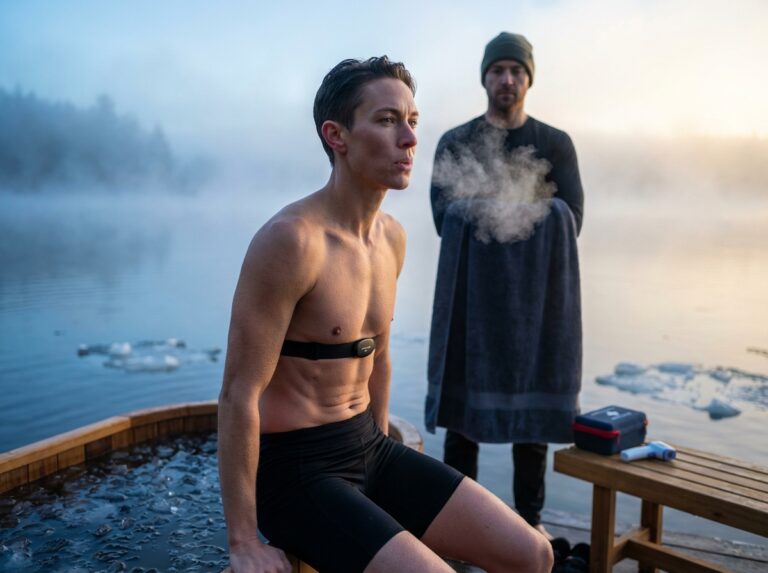
Never plunge alone. A buddy ensures you can exit the water if your muscles lock up or you become confused. Plan your exit before you get in. Keep a towel plus warm clothing within arm’s reach. Use an insulated mat on the ground, as wet feet on cold pavement can lead to slips. Ensure there is a clear path to a warm space.
Post-Immersion Care and Faintness
Rewarming should be gradual. Avoid jumping into a hot shower immediately, as this can cause a sudden drop in blood pressure as peripheral vessels dilate too fast. Use passive rewarming: put on layers, drink warm fluids, and move your body gently to generate internal heat. If you feel faint during or after a plunge, it is a sign of orthostatic hypotension or a vasovagal response. The cold causes immediate peripheral vasoconstriction which shifts blood volume toward the core; when you exit, blood can pool in the legs. If you feel dizzy, exit the water slowly and sit down immediately for two minutes to allow blood pressure to stabilize.
Comparing Cryotherapy and Cold Plunges
You have two main choices for cold exposure. Whole body cryotherapy (WBC) uses air. Cold water immersion (CWI) uses water. They differ in cost plus effectiveness.
| Feature | Whole Body Cryotherapy (WBC) | Cold Water Immersion (CWI) |
|---|---|---|
| Temperature | -110°C to -140°C (-166°F to -220°F) | 0°C to 15°C (32°F to 59°F) |
| Duration | 2 to 3 minutes | 1 to 15 minutes |
| Mechanism | Gaseous cooling (less conductive) | Conductive cooling (highly potent) |
| Cost | $30 to $60 per session | $500 to $10,000 for home units |
| Evidence | Mixed for muscle recovery | Strong for dopamine plus inflammation |
WBC is often more accessible in cities and is fast. However, water is much more conductive than air. A 10°C (50°F) water plunge is often perceived as more intense than a -110°C air chamber because water provides a more significant drop in core temperature. Choose WBC if you have skin sensitivities to water or need a very brief session. Choose ice baths for the most robust neurochemical response.
Long Term Recovery and Training Integration
Cold exposure must fit into your broader training cycle. It is not just about the plunge; it is about how you recover afterward. Nutrition plays a role; ensure you have adequate protein plus omega-3 fatty acids to support tissue repair. Sleep is the ultimate recovery tool. Avoid very cold plunges late at night (within four hours of bedtime), as the spike in norepinephrine and dopamine can be too stimulating and delay sleep onset.
Active Recovery and Compression
Cold is one tool. Combine it with active recovery. Light movement helps flush metabolic waste. Compression garments can also help by supporting circulation during the rewarming phase. Do not rely on cold as your only recovery method. Use it as a strategic spike in your routine.
Using Wearables for Protocol Adjustment
Modern wearables provide data to refine your cold use. Track your heart rate (HR) plus heart rate variability (HRV). Expect your HR to spike during immersion—this is the sympathetic response. It should return to baseline within minutes of exiting. If your HR stays elevated for hours, the dose was too high.
Interpreting HRV
HRV usually drops during the cold but should rebound higher later. A rising baseline HRV over several weeks suggests you are adapting well. If your morning HRV takes a dive after a cold session, you are likely overreaching. Use a waterproof chest strap for the most accurate HR data in water, as wrist sensors often fail in the cold due to reduced blood flow in the skin. Monitor your core temperature if possible. Most recreational users should focus on subjective feelings plus HR recovery. If you feel “off” or excessively tired the next day, reduce the frequency of your plunges.
For more details on the science of these protocols, you can explore The Science & Use of Cold Exposure for deeper insights into physiological responses.
References
- Using Deliberate Cold Exposure for Health and Performance — I detail specific protocols to safely engage in deliberate cold exposure … Using Deliberate Cold Exposure for Health and Performance | Huberman …
- Cold Exposure for Mental Health: Benefits, Science, and Practical Tips — Cold immersion strengthens the immune system, helps regulate stress, and boosts mental clarity, all while training the body and mind to adapt to challenging …
- Andrew Huberman's Cold Exposure Dos and Don'ts – Hone Health — Huberman points to research that 11 minutes of cold exposure per week is enough to reap the benefits of increased brown fat thermogenesis, which can boost core …
- Dr. Susanna Søberg: How to Use Cold & Heat Exposure to Improve … — We discuss how cold or sauna can improve metabolism, cardiovascular and brain health, balance hormones, and decrease inflammation.
- The Science & Use of Cold Exposure for Health & Performance — One study showed significant and prolonged increases in dopamine when people were in cool (60°F) water for about an hour up to their neck, with their head above …
- A Ridiculously In-Depth Analysis of Cold Water Immersion Claims — Analysing claims about the benefits of cold water immersion or ice baths. What are the real effects, and are there better ways to get there?
- Cold Plunges and Deliberate Cooling – Huberman Lab — Deliberate cold exposure generates a controlled physiological stress response that impacts heart rate and blood pressure, breathing and nervous system …
- Effects of cold-water immersion on health and wellbeing – NIH — This systematic review suggests that CWI delivers time-dependent effects on inflammation, stress, immunity, sleep quality, and quality of life, …
Legal Disclaimers & Brand Notices
The content provided in this article is for informational purposes only and does not constitute professional medical advice, diagnosis, or treatment. Always seek the advice of your physician or other qualified health provider with any questions you may have regarding a medical condition or the safety of starting a new health protocol, such as deliberate cold exposure or cryotherapy. Never disregard professional medical advice or delay in seeking it because of something you have read in this article.
All product names, logos, and brands mentioned in this text are the property of their respective owners. All company, product, and service names used in this article are for identification purposes only. Use of these names, logos, and brands does not imply endorsement.