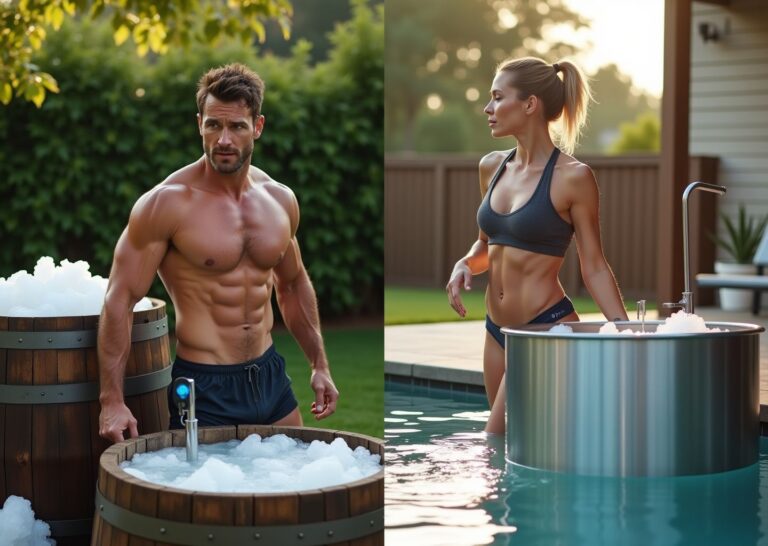
Ice baths and cold plunges are powerful tools for accelerating recovery, reducing soreness, and sharpening performance when used correctly. This guide walks beginners through the science, safety screening, step-by-step first-plunge protocol, and sport-specific timing. Learn how to pick temperatures, manage duration, use contrast therapy, and avoid common mistakes so your cold exposure supports performance rather than undermining long-term training gains.
How Ice Baths Work and Performance Benefits
Understanding how cold water immersion affects the human body requires a look at basic survival mechanisms. When you submerge your body in icy water, the most immediate reaction is peripheral vasoconstriction. This is a process where the small blood vessels near the surface of your skin tighten up. Your body is essentially pulling blood away from your extremities to protect your vital organs in the core. This shift helps maintain your internal temperature but it also creates a unique internal pressure. Once you exit the water and begin to warm up, the opposite happens. This is known as vasodilation. Your blood vessels open wide and a fresh supply of oxygenated blood rushes back to your muscles and skin. This cycle is often compared to a natural pump that helps move metabolic byproducts out of tired tissues.
The Impact on Metabolism and Nerves
The cold does more than just move blood around. It significantly lowers the temperature of your muscle tissue which in turn reduces your metabolic rate. When your muscles are cold, the chemical reactions that drive cellular activity slow down. This can be particularly helpful after a grueling workout because it limits the secondary tissue damage that often follows intense physical stress. Another major factor is the effect on your nervous system. Cold water immersion leads to a decreased nerve conduction velocity. Essentially, the speed at which pain signals travel to your brain slows down. This is why many people feel an immediate sense of relief from aches and pains after a plunge. It is not just a mental trick. Your nerves are physically sending fewer pain messages. Research from late 2025 suggests that The Science Behind Cold Plunges: What Research Really Says confirms that this constriction helps limit the swelling that typically follows muscle tears and heavy exertion.
Inflammation and Cellular Health
The relationship between ice baths and inflammation is complex. For a long time, people thought inflammation was purely negative. We now know that some inflammation is necessary for the body to adapt and get stronger. Cold water immersion modulates inflammatory mediators and cytokines. While it can cause a short term spike in certain stress markers, the long term effect is often a reduction in chronic systemic inflammation. A study released in March 2025 by the University of Ottawa found that regular cold exposure actually changes your cells. It improves autophagic function, which is the process your body uses to clean out damaged cellular components. You can find more details on how Cold plunges actually change your cells – ScienceDaily to see how this cellular recycling helps manage biological stress. This suggests that the benefits of a plunge go far deeper than just soothing a sore muscle.
Clinical Evidence for Recovery
When we look at the sports science data, the most consistent finding is the reduction of Delayed Onset Muscle Soreness or DOMS. Multiple systematic reviews and meta analyses have shown that athletes who use cold water immersion report significantly lower levels of subjective muscle soreness. They simply feel better and more ready to train the next day. This is a major reason why ice baths have become a staple in professional locker rooms across the United States. However, the evidence for actual performance gains is more nuanced. While you might feel less tired, the cold does not necessarily make you faster or stronger on its own. It is a recovery tool rather than a direct performance enhancer. Some experts even point out that Cold-water plunging health benefits – Mayo Clinic Health System are most visible in how quickly an athlete can return to their baseline after a hard session.
The Hypertrophy Conflict
Anabolic Signaling and Strength
For those focused on building maximum muscle size or raw strength, the timing of an ice bath is critical. Research indicates that jumping into cold water immediately after a resistance training session can blunt anabolic signaling. This means the cold might interfere with the pathways (such as mTOR) that tell your muscles to grow larger and stronger. If your primary goal is hypertrophy, using an ice bath right after you lift might actually work against you. It is recommended that strength athletes wait at least 24 hours before using cold therapy or save it for active recovery days. This allows the natural inflammatory response from lifting to do its job of building new muscle tissue.
Sport Specific Applications
Endurance and Team Sports
Athletes in endurance sports like long distance running or cycling often find great value in acute recovery. The same applies to team sport players who have to compete in multiple matches over a short period. In these cases, the priority is feeling fresh for the next game rather than long term muscle growth. Reducing the perception of fatigue and soreness allows these athletes to maintain a higher intensity throughout a tournament or a heavy training block. For them, the trade off of slightly reduced muscle adaptation is worth the immediate boost in readiness.
| Athlete Type | Primary Benefit | Recommended Timing |
|---|---|---|
| Endurance Runners | Reduced fatigue and core cooling | Post workout or between sessions |
| Team Sports | Faster turnaround for matches | 30 to 60 minutes after competition |
| Strength Athletes | Pain management and recovery | 24 hours after heavy lifting |
| General Fitness | Improved sleep and well being | Any time except post hypertrophy |
Realistic Limits and Expectations
It is important to remember that an ice bath is not a magic bullet for health. It will not fix a poor diet or a lack of sleep. While a systematic review on the Effects of cold-water immersion on health and wellbeing – PubMed shows improvements in sleep quality and a 29 percent reduction in sick days for those using cold showers, these are incremental gains. You should expect to feel less sore and perhaps more mentally alert, but do not expect it to replace foundational recovery work. The psychological benefit is also significant. Successfully enduring the cold can build mental resilience and provide a sense of accomplishment that carries over into other areas of training.
Getting Ready for Your First Plunge
Safety and Medical Screening
Before you touch the water, you must evaluate your health status. Cold immersion puts intense stress on the heart, blood vessels, and nervous system. If you have uncontrolled hypertension or cardiovascular disease, the sudden cold shock can be dangerous. This also applies to anyone who is pregnant or has Raynaud’s disease. Open wounds and recent surgeries are absolute contraindications because of infection risks and delayed healing. Additionally, while there are no strict age limits, children and the elderly require extra caution. Children have a higher surface area to mass ratio, losing heat quickly, while older adults may have underlying vascular issues. If you feel any doubt about your condition, get medical clearance from a doctor first.
Essential Equipment and Setup
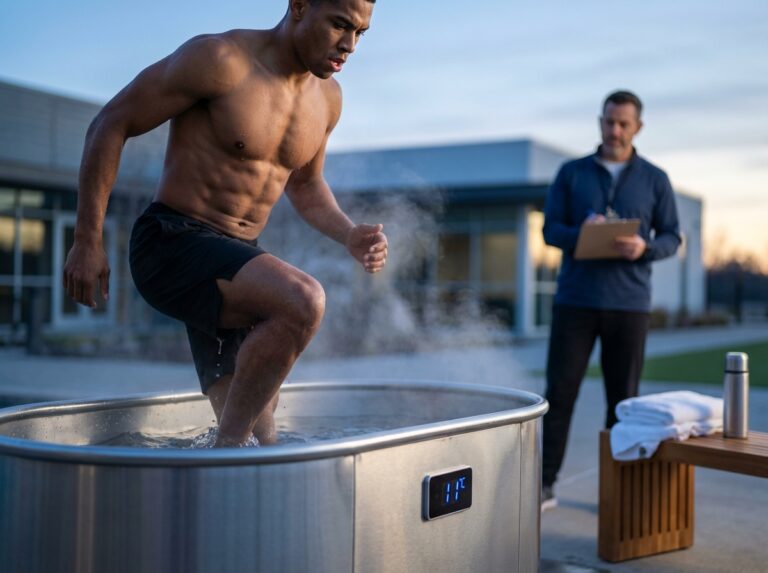
You do not need a high-end setup to start. A simple tub or a chest-deep container works well. You will need a reliable thermometer to track the water temperature. A timer is necessary to monitor your exposure. Keep plenty of ice or a chilled water source ready to reach the target temperature. Place a towel, warm clothing, and a blanket nearby for immediate use after you exit. Keep a phone or a buddy close for safety. Having a chair nearby is helpful if you feel lightheaded after standing up.
Breathing and Mental Preparation
Managing the initial cold shock requires mental focus. Controlled slow diaphragmatic breathing helps calm the nervous system. You can use box breathing, which involves inhaling for four seconds, holding for four, exhaling for four, and holding again for four. This technique prevents the hyperventilation that often happens when you first hit the water. Progressive exposure is another useful tool. You can start with cold showers to get used to the sensation before moving to a full soak. Mental preparation is about accepting the discomfort rather than fighting it.
Conservative First-Plunge Protocol
For your first session, keep the numbers conservative. The recommended beginner temperature is 50 to 59°F (10 to 15°C). This range is cold enough to trigger a response without being overwhelming. Your first session should last only 1 to 3 minutes while seated. Do not try to push through extreme pain. You can progress to 5 to 10 minutes over subsequent sessions as your body adapts. Never exceed 15 minutes in a single session. Research shows that cold-water immersion delivers time-dependent effects, but longer is not always better.
Safe Entry Routine
How you enter the water matters. Wet your hands and feet first to signal the change to your brain. Sit down slowly and let your body acclimate. Keep your head out of the water to avoid excessive heat loss and disorientation. Stay as calm as possible and focus on your breath. Monitor your sensations constantly. It is normal to experience shivering, some numbness, and an initial gasp. These are standard physiological reactions to the cold. However, you must know when to stop.
Clear Stop Signals
You need to exit the water immediately if you experience certain red flags. Dizziness or lightheadedness indicates your blood pressure or heart rate is struggling to stabilize. Chest pain is a serious warning sign. Severe numbness that prevents movement or sudden confusion are also signals to get out. Do not try to be a hero. If your body says no, listen to it. According to the Mayo Clinic, while icy water helps recovery, it must be done safely to avoid risks.
Practical Aftercare Tips
The work continues after you leave the tub. Put on warm clothes and a hat immediately. Use an active re-warm strategy by performing light movement like walking or air squats. This helps circulate blood back to your extremities. Drink water to stay hydrated and have a gentle snack if you feel low on energy. It is helpful to log your responses. Note your Rate of Perceived Exertion (RPE), muscle soreness levels, and how you sleep that night. This data helps you adjust your future sessions for better results.
Long-Term Consistency
Building a routine is more effective than one-off sessions. Aim for two to four sessions per week as you start. This frequency allows your cells to adapt. Recent studies suggest that cold plunges change your cells by improving resilience and autophagic function over time. Consistency helps your body manage the stress of the cold more efficiently. You will likely find that the initial shock becomes easier to handle with every plunge. Focus on the process rather than the intensity in these early stages.
Managing the Shiver Response
Shivering is your body’s way of generating heat. It is a natural part of the recovery process. Some people prefer to let the shivering happen for a few minutes before bundling up to maximize the metabolic boost. If the shivering is violent or uncomfortable, wrap yourself in a blanket and drink a warm liquid. The goal is a steady return to your baseline temperature. Avoid taking a hot shower immediately after the plunge. This can cause a rapid drop in blood pressure as your vessels dilate too quickly. Wait at least 20 to 30 minutes for your body to warm up naturally.
Protocols Timing and Advanced Techniques
Recovery and DOMS Reduction Protocols
The primary goal for most beginners is managing delayed onset muscle soreness, or DOMS. To achieve this, you should keep the water temperature between 50 and 59 degrees Fahrenheit. This range is cold enough to trigger peripheral vasoconstriction, which moves blood away from the limbs and toward the core. Staying in the water for 5 to 10 minutes is sufficient to reduce the perception of pain and limit muscle swelling. Research on the effects of cold-water immersion on health and wellbeing – PubMed indicates that these time dependent effects are crucial for managing the inflammatory response after a hard workout. By cooling the tissue, you lower the metabolic rate of the muscle cells, which can prevent secondary tissue damage caused by excessive inflammation.
Aggressive Competitive Recovery
Athletes who need to perform again within a few hours or a single day might use more aggressive settings. This involves temperatures between 35 and 50 degrees Fahrenheit for 5 to 12 minutes. This protocol is only for experienced users because the risk of cold injury and hypothermia increases significantly at these levels. The rationale here is to shut down the inflammatory process as quickly as possible to restore range of motion and reduce acute soreness. While effective for short term recovery during a tournament, it is not recommended for daily use due to the high stress it places on the cardiovascular system.
Cryotherapy Chamber Comparison
Whole body cryotherapy is an alternative to the traditional ice bath. You enter a chamber where the air is cooled to between minus 110 and minus 160 degrees Celsius using liquid nitrogen or electric cooling. These sessions are very brief, usually lasting only 2 to 3 minutes. The main difference is that air does not conduct cold as efficiently as water. While cryotherapy is often more comfortable because it is dry, an ice bath provides a deeper and more consistent cooling of the muscle tissue. Cryotherapy is also much more expensive, often costing fifty to one hundred dollars per session, whereas an ice bath can be set up at home for the cost of a few bags of ice.
Progressive Four Week Schedule
Moving from a beginner to an advanced level requires a structured approach to avoid shocking the system. Use the following table to guide your progression over the first month.
| Week | Temperature | Duration | Frequency |
|---|---|---|---|
| Week 1 | 55 to 59°F | 1 to 3 minutes | 2 sessions |
| Week 2 | 52 to 55°F | 3 to 5 minutes | 3 sessions |
| Week 3 | 50 to 52°F | 5 to 8 minutes | 3 sessions |
| Week 4 | 50°F | 10 minutes | 4 sessions |
Contrast Therapy Instructions
Contrast therapy uses alternating hot and cold temperatures to create a vascular flush. Start with a hot immersion or a shower at 100 to 104 degrees Fahrenheit for 2 to 3 minutes. Immediately follow this with a cold plunge at 50 to 59 degrees Fahrenheit for 1 to 2 minutes. Repeat this cycle for 3 to 6 rounds. The rapid expansion and contraction of blood vessels helps move metabolic waste out of the muscles. If your objective is to reduce inflammation, you should always end on the cold cycle. If you are using the session for relaxation or to prepare for sleep, ending on the warm cycle is better for muscle tension release.
Advanced Combinations and Monitoring
You can maximize the effects of the cold by pairing it with other recovery strategies. Wearing compression garments after a plunge can help maintain the vascular effects. It is also vital to align your plunges with proper sleep and nutrition. To track if the protocol is working, keep a simple log of your soreness scores, morning readiness, and performance outputs. If you notice that your strength or speed is declining despite the ice baths, you may need to adjust the duration or temperature.
Conclusion and Practical Takeaways
Cold water immersion is a practical tool for physical recovery as well as mental resilience. This guide has covered the mechanics of how icy water constricts blood vessels to limit swelling. It has also detailed the protocols needed to stay safe. As of late 2025, the evidence for these benefits is clearer than ever. Research from the University of Ottawa released in March 2025 shows that consistent cold exposure for seven days improves cellular resilience. This happens by enhancing autophagic function, which is the body’s way of recycling damaged cell components. You are not just cooling your skin. You are training your cells to manage stress better.
Beginner Protocol Essentials
Starting your journey requires a controlled environment. Your first plunge should not be a test of willpower against extreme temperatures. Keep the water between 50 and 59 degrees Fahrenheit. This range is cold enough to trigger a response without causing immediate distress. Your initial duration should be short, lasting only one to three minutes. You can sit in the water or keep your limbs submerged. The goal is to manage the initial cold shock response through steady breathing. As you adapt, you can move toward a progressive plan. Increase your time by thirty seconds each session until you reach a five to ten minute window. This gradual approach prevents overtaxing your nervous system.
Primary Benefits of the Plunge
The most immediate advantage is the reduction of delayed onset muscle soreness. By lowering tissue temperature, you decrease the metabolic rate and nerve conduction velocity. This leads to less perceived pain after intense exercise. Cold-water plunging health benefits – Mayo Clinic Health System indicate that icy water has a positive effect on recovery by dampening inflammation. Beyond muscle repair, there is a significant boost to the immune system. Studies have shown that regular cold exposure can lead to a 29% reduction in sick days. This is a long term gain that comes from consistent practice rather than a single session. You might also notice better sleep quality as well as a more stable mood due to the release of norepinephrine.
One Week First Session Checklist
To implement these steps, start with a preparation week. This ensures you have the right equipment as well as a safe environment.
- Verify your water temperature with a reliable thermometer.
- Set a timer for exactly two minutes for your first plunge.
- Prepare a warm towel and heavy clothes for immediate aftercare.
- Have a warm drink ready to help your core temperature recover.
- Practice diaphragmatic breathing for five minutes before entering the water.
- Ensure a friend is present to monitor your progress.
Evaluating Your Progress
You should track how you feel to determine if the protocol is working for you. Keep a simple log of your muscle soreness levels as well as your daily readiness. Note any changes in your athletic performance or sleep patterns. If you find that ice baths are making you feel more fatigued or if your strength gains are stalling, you may need to adjust the timing. Cold plunges actually change your cells – ScienceDaily suggests that the cellular benefits take time to manifest. Do not rush the process. If you have specific goals like maximum muscle hypertrophy, consult a coach. They can help you place your plunges at least twenty four hours after heavy lifting to avoid blunting the growth signals. Always speak with a clinician if you experience persistent joint pain or unusual skin reactions. Cold therapy is a personal journey. Tailoring it to your unique physiology is the best way to achieve peak performance.
References
- Effects of cold-water immersion on health and wellbeing – PubMed — Conclusions: This systematic review suggests that CWI delivers time-dependent effects on inflammation, stress, immunity, sleep quality, and …
- The health benefits (and risks) of cold plunges – Advisory Board — In that study, showering in cold water for at least 30 seconds led to a 29% reduction in sick days by participants. Other research has …
- Jumping into the Ice Bath Trend! Mental Health Benefits of Cold … — Research shows that cold water immersion (CWI) may improve mental health by increasing endorphin and norepinephrine levels. · CWI may also …
- Cold plunges actually change your cells – ScienceDaily — Cold water immersion for seven days significantly improves cellular resilience and autophagic function, helping cells manage stress better.
- Cold Water Immersion: What to Know about This Popular Trend — The study found that CWI reduces inflammation and stress for a short time. It also boosts immunity, sleep quality, and overall well-being. How …
- Do Ice Baths Work? PT Professor Breaks It Down | MCPHS News — "The scientific evidence overwhelmingly shows that ice baths are not beneficial for athletic performance," Joyce says. "Cold water immersion …
- Cold-water plunging health benefits – Mayo Clinic Health System — Research indicates that icy water may have a positive effect on recovery after exercise by reducing inflammation and soreness.
- The Science Behind Cold Plunges: What Research Really Says … — Research shows that exposure to cold water causes blood vessels to constrict, helping limit swelling and inflammation in tired muscles. When the …
Legal Disclaimers & Brand Notices
The content provided in this article is for informational purposes only and does not constitute professional medical advice, diagnosis, or treatment. Always seek the advice of your physician or another qualified health provider with any questions you may have regarding a medical condition, safety screenings, or the physical risks associated with cold water immersion and recovery protocols.
All product names, logos, and brands mentioned in this text are the property of their respective owners. All company, product, and service names used in this article are for identification purposes only. Use of these names, trademarks, and brands does not imply endorsement or affiliation.