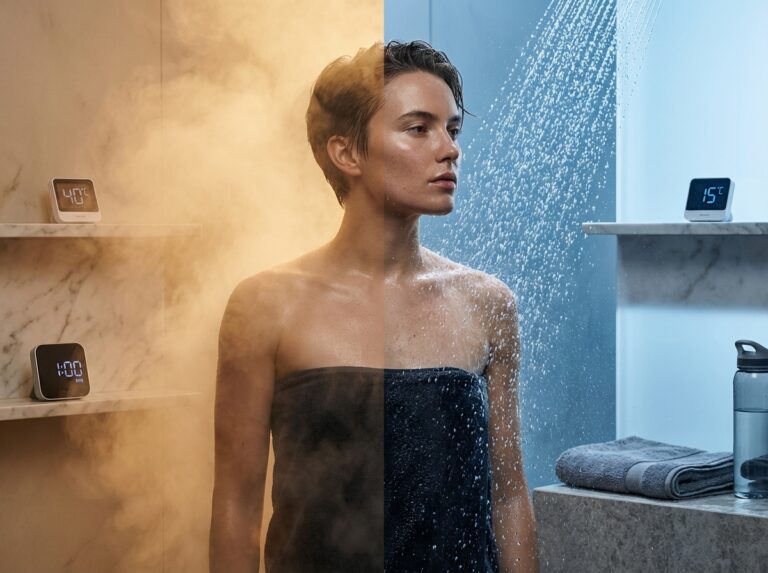
Contrast therapy—alternating heat and cold—is a powerful tool athletes use to speed recovery, reduce soreness, and prime performance. This guide breaks down mechanisms, evidence, exact temperature ranges, ideal hot to cold ratios, sport-specific protocols, safety considerations, and practical routines so coaches and athletes can apply contrast therapy with confidence and measurable results.
Why contrast therapy matters for athletes
Contrast therapy is a recovery method that involves alternating between hot and cold temperatures. It’s a simple concept, but the specific terms can get confusing. Let’s clear them up. Contrast therapy itself is the umbrella term for any routine that switches between heat and cold. This is often done using water, but not always. Cold Water Immersion (CWI) is what most people think of for athletic recovery, typically involving a plunge into water between 8–15°C (46–59°F). An ice bath is a more intense version of CWI, with temperatures dropping to 0–4°C (32–39°F), often used in more clinical settings. On the other end of the spectrum, you have heat. A hot bath is usually set between 37–40°C (98–104°F), while a sauna provides dry heat from 70–100°C (158–212°F). For those without special equipment, a contrast shower, alternating hot and cold streams, can provide similar benefits. Finally, cryotherapy usually refers to whole-body cryotherapy, where you stand in a chamber cooled to extreme temperatures like -110°C to -140°C (-166°F to -220°F) for just a few minutes.
The idea of using temperature for healing isn’t new. Ancient Greek and Roman physicians used hot and cold baths for health and recovery. But its modern application in sports medicine really took shape in the 20th century as a tool for physical rehabilitation. Today, it’s a staple in the recovery routines of elite athletes everywhere. Coaches and trainers use it to help their athletes bounce back faster between games, reduce muscle soreness, and manage the physical toll of intense training schedules. The core idea is that the rapid change in temperature creates a pumping action in the blood vessels, which is thought to help clear metabolic waste from muscles and reduce swelling.
So, does it actually work? The evidence points to yes, especially for short-term recovery. Multiple studies and meta-analyses have found that contrast water therapy is more effective at reducing muscle soreness than passive recovery. For instance, key research has shown that it not only reduces pain markers but also helps restore muscle function after strenuous exercise. In practical terms, studies show contrast therapy can reduce delayed onset muscle soreness (DOMS) by 20–30%. Athletes also report feeling better, with perceived recovery often improving by 15–25% compared to just resting. There’s a physiological basis for this. Research indicates that contrast protocols can lower inflammatory markers like IL-6 by about 10–15%, helping to calm down the body’s response to muscle damage. The alternating temperatures are believed to enhance circulation and accelerate the body’s natural healing processes, as detailed in a comprehensive review on the mechanisms and efficacy of contrast therapy.
It’s important to distinguish between feeling better now and getting stronger later. Contrast therapy is a powerful tool for managing symptoms and restoring performance quickly. This makes it incredibly valuable in specific situations. For athletes in tournaments with multiple games in a day or over a weekend, it can be a critical tool for staying fresh. It’s also highly effective for managing acute DOMS, especially in the 24 to 48-hour window after a grueling workout when soreness peaks. Many traveling athletes also use it to combat the stiffness and inflammation that comes with long flights across time zones.
However, contrast therapy isn’t a magic bullet for every situation. Its one major area of caution is immediately after strength training, particularly if your primary goal is building muscle mass (hypertrophy). The inflammatory process that causes muscle soreness is also a key signal for the body to repair and build bigger, stronger muscles. Blunting this response with immediate cold exposure might interfere with those long-term adaptations. Most research suggests this interference is only a concern within the first hour or two after lifting. If you wait around four hours, using contrast therapy is unlikely to hurt your gains and can still provide significant recovery benefits. The key is timing. Don’t jump straight from the squat rack into an ice bath if muscle growth is your top priority.
Finally, it’s worth noting that while the body of evidence supporting contrast therapy is growing, the research itself is varied. Studies use different temperatures, timings, and hot-to-cold ratios, which can lead to different outcomes. This lack of a standardized protocol means that what works best is often a matter of context and individual response.
How heat and cold affect the body mechanisms explained
To understand why alternating between a hot sauna and a cold plunge feels so restorative, we need to look under the skin at the intricate dance of physiology. Contrast therapy isn’t just about the shocking sensation; it’s a deliberate manipulation of your body’s circulatory, nervous, and metabolic systems. The rapid switch between hot and cold temperatures creates a powerful cascade of events that accelerates recovery and primes you for performance.
The primary mechanism at play is the “vascular pump.” Think of your blood vessels, specifically the arteries and veins in your limbs, as flexible pipes.
- Heat Exposure: When you step into a hot bath or sauna, your body triggers vasodilation. Your blood vessels expand, or dilate, to bring more blood to the surface of your skin to release heat. This can increase local blood flow by as much as 200–300%, flooding your muscles with oxygen and nutrient-rich blood.
- Cold Exposure: The moment you plunge into cold water, the opposite happens. Your body initiates vasoconstriction, a rapid tightening of those same blood vessels. This is a protective reflex to conserve core body heat. Blood flow to the extremities can decrease by 50–70%, shunting blood back toward your vital organs.
Alternating between these two states forces your circulatory system to work like a pump. Each cycle pushes out old, stagnant blood filled with metabolic byproducts like lactate and brings in a fresh supply. This process also significantly enhances lymphatic drainage. Your lymphatic system, which is crucial for clearing cellular waste and managing inflammation, lacks a central pump like the heart. The muscular contractions created by vasodilation and vasoconstriction help move lymphatic fluid along, improving drainage by an estimated 20–40%.
This physiological response can be broken down into a simple sequence.
- Step 1 (Heat): Blood vessels widen. Fresh, oxygenated blood floods the tissues.
- Step 2 (Cold): Blood vessels constrict. Deoxygenated blood and metabolic waste are squeezed out of the muscles.
- Step 3 (Repeat): The cycle repeats, creating a dynamic flushing and refilling action that static hot or cold therapy alone cannot replicate.
But the effects go far beyond simple plumbing. The temperature changes directly influence your nervous system and pain perception. Cold exposure dramatically slows nerve conduction velocity, by up to 30%. This effectively numbs sore areas, providing immediate pain relief through a mechanism known as the gate control theory of pain, where the cold sensation overrides pain signals traveling to the brain. Heat, on the other hand, can raise your pain threshold and stimulate the release of endorphins, your body’s natural painkillers.
On a deeper level, contrast therapy is a workout for your autonomic nervous system, the part of your brain that controls involuntary functions like heart rate and breathing.
Autonomic Nervous System Response
The cold plunge triggers a powerful sympathetic, or “fight-or-flight,” response. Your body releases a surge of norepinephrine, a hormone and neurotransmitter that increases alertness, focus, and energy. Studies show this can spike by over 200%. Conversely, the heat exposure encourages a parasympathetic, or “rest-and-digest,” state. This shift helps lower your heart rate, promotes relaxation, and can improve Heart Rate Variability (HRV), a key metric for athletic recovery. Regularly training this system to switch between states efficiently can build resilience to stress, both in and out of your sport.
As a coach or athlete, you don’t need a lab to see if it’s working. You can monitor the effects with simple, practical metrics.
- Perceived Exertion and Pain: Use a 0-10 scale for Rating of Perceived Exertion (RPE) and a 0-100mm Visual Analog Scale (VAS) for pain. A successful session should noticeably lower both scores.
- Heart Rate: Expect your heart rate to jump by 20–30 beats per minute during the cold phase and stabilize or slightly decrease during the heat phase. A lower resting heart rate the next morning is a good sign of recovery.
- Skin Temperature: A simple infrared thermometer can show skin temperature dropping to around 10–15°C (50–59°F) in the cold and rising to 38–40°C (100–104°F) in the heat, confirming a strong physiological response.
- Performance Tests: Simple functional tests, like a vertical jump, can provide objective data. Athletes often see their jump height recover 5–10% faster in the 24–48 hours following a tough session when using contrast therapy.
By understanding these mechanisms, you can move beyond simply enduring the cold and start using contrast therapy as a precise tool to manipulate your physiology for faster recovery and better performance.
Exact temperatures timing and ratios for different goals
After understanding the physiological mechanisms at play, the next step is translating that science into actionable protocols. The effectiveness of contrast therapy isn’t just about alternating temperatures; it’s about precision. The right temperatures, durations, and ratios are what separate a refreshing dip from a targeted recovery tool. This guide provides the exact numbers you need to tailor your sessions for specific goals, from post-marathon recovery to pre-game activation.
Defining Your Temperatures: The Foundation of Your Protocol
The temperature differential between your hot and cold immersions drives the therapeutic effect. Getting these ranges right is crucial for safety and results.
- Cold Immersion Ranges: Not all cold is created equal. The temperature you choose depends on your goal and tolerance.
Extreme Clinical Ice Baths: 0–4°C (32–39°F). This range is typically reserved for clinical settings or very advanced practitioners for short durations of 1 to 2 minutes. The risk of cold injury is high, and it offers diminishing returns for general athletic recovery.
Common Athletic Cold Plunges: 8–15°C (46–59°F). This is the sweet spot for most athletes. It’s cold enough to trigger a strong vasoconstrictive response and analgesic effect without being overly dangerous. A duration of 2 to 5 minutes is standard.
Recommended Post-Competition Recovery: 10–15°C (50–59°F). This slightly warmer range is often cited as ideal for promoting recovery without excessive stress on the system, making it a perfect starting point. - Heat Immersion Ranges: The goal of the heat phase is to promote significant vasodilation and blood flow.
Hot Baths or Tubs: 37–40°C (98–104°F). This temperature is warm enough to increase circulation and relax muscles effectively. It’s accessible and easy to control.
Saunas: 70–100°C (158–212°F). While a sauna can be used for the heat portion, the dry heat provides a different stimulus. It’s excellent for promoting sweating and relaxation but makes the rapid transition to cold water more logistically challenging.
Timing and Ratios: The Art of the Session
The ratio of time spent in heat versus cold dictates the primary outcome of your session. A typical contrast therapy session lasts between 8 and 20 minutes, comprising 3 to 6 full cycles.
- 3:1 Ratio (Hot to Cold): For example, 3 minutes hot followed by 1 minute cold. This ratio emphasizes blood flow and heat exposure, making it ideal for improving circulation and warming up tissues. Research has shown that repeated short cold exposures can diminish the blood flow response in subsequent heat cycles, so a longer heat period helps counteract this. You can find more on this in the study Effect of Time Ratio of Heat to Cold on Brachial Artery Blood Velocity.
- 1:1 Ratio (Hot to Cold): For example, 2 minutes hot followed by 2 minutes cold. This provides a balanced stimulus, offering both significant vasodilation and vasoconstriction. It’s a great general-purpose ratio for overall recovery and nervous system regulation.
- Short Cold Bursts: For example, 2–3 minutes hot followed by 30–60 seconds cold. This method is designed to maximize the “vascular pump” effect. The short, sharp cold shock creates a powerful vasoconstrictive response, and the quick return to heat aggressively re-opens the blood vessels, creating a flushing action.
Goal-Specific Protocols
Here are step-by-step routines for common athletic scenarios. Remember to start these sessions 1 to 2 hours after your event or training to avoid interfering with acute adaptation signals.
Endurance Athlete Post-Race Recovery
Goal: Reduce muscle soreness and inflammation, flush metabolic waste.
When: 1–2 hours after the event.
Protocol:
- Start with a 4-minute hot bath at 39°C (102°F).
- Immediately transition to a 2-minute cold plunge at 12°C (54°F).
- Repeat for a total of 4 cycles.
- Always end the final cycle with cold immersion.
Strength Athlete Post-Lifting Recovery
Goal: Mitigate delayed onset muscle soreness (DOMS) without blunting hypertrophy signals.
When: 4+ hours after lifting, or on a rest day.
Protocol:
- Use a balanced 1:1 ratio. Start with 3 minutes hot at 40°C (104°F).
- Transition to 3 minutes cold at 15°C (59°F).
- Repeat for 3 cycles (18 minutes total).
- End with cold to help manage inflammation from the training session.
Contact Sports Acute Recovery
Goal: Manage bruising, swelling, and acute soreness from impacts.
When: 1–2 hours after a game or heavy practice.
Protocol:
- Start with 3 minutes hot at 38°C (100°F).
- Transition to a 1-minute cold plunge at 10°C (50°F). The colder temperature is key here.
- Repeat for 5 cycles.
- End with a final 2-minute cold immersion to maximize vasoconstriction in bruised areas.
Pre-Event Priming
Goal: Increase blood flow, warm up muscles, and stimulate the nervous system.
When: 2–3 hours before competition.
Protocol:
- Use a flow-focused 3:1 ratio with milder temperatures. Start with 3 minutes hot at 38°C (100°F).
- Transition to 1 minute of cool water at 18°C (64°F). Avoid shocking cold.
- Repeat for 3 cycles.
- Crucially, end with the hot immersion to leave muscles vasodilated and ready for performance.
A Note on Whole-Body Cryotherapy (WBC)
WBC chambers use chilled air to expose the body to extreme temperatures, typically -110°C to -140°C (-166°F to -220°F), for 2 to 3 minutes. While it can be used as the “cold” portion of a contrast routine, it’s a different modality.
- Pros: It’s fast, dry, and some find it less jarring than cold water.
- Cons: It’s expensive, less accessible, and lacks the hydrostatic pressure of water, which aids in reducing swelling. For creating a true vascular pump, water immersion remains more effective.
Practical setup safety and individualized tailoring
Moving from theory to practice requires a solid plan for your setup, safety, and personal adjustments. Whether you’re a home user piecing together a DIY system or a facility manager installing a professional suite, the principles of safe and effective implementation are the same. This guide walks you through equipment choices, sanitation, critical safety checks, and how to tailor the therapy to your unique needs.
Equipment and Setup Options
Your budget and space will largely dictate your equipment choices. Professional facilities often invest in dedicated plunge pools and saunas, but effective home setups are more accessible than ever.
- Tubs and Plunge Pools
For home use, inflatable tubs (100–200 gallons) are a great starting point and relatively affordable. For a more permanent solution, a DIY chest freezer conversion can maintain temperatures around 5°C (41°F) with the help of a temperature controller and proper sealing. Commercial-grade cold plunges and hot tubs offer precise temperature control but come at a higher cost. - Contrast Showers
The simplest entry point is your own shower. While less immersive, rapidly switching from hot to cold water can still stimulate circulation. For a more dedicated setup, dual-head fixtures allow for instant temperature changes. - Saunas and Heat Sources
Traditional dry saunas reach high temperatures (70–100°C / 158–212°F) and are excellent for the heat cycle. Infrared saunas are a popular home option, operating at lower temperatures (50–60°C / 122–140°F) but still providing deep heat. A simple hot bath or shower is a perfectly acceptable alternative. - Cryotherapy Booths
Whole-body cryotherapy chambers are a clinical or high-end gym option, exposing the body to extremely cold, dry air for 2–3 minutes. These are typically accessed on a per-session basis at specialized facilities.
For any setup, a reliable digital thermometer is non-negotiable. Don’t guess your water temperature. Calibrate your thermometer weekly to ensure accuracy. When mixing water, add cold water first, then gradually add hot water to the hot tub, or add ice to the cold tub until you reach your target temperature, checking frequently.
Sanitation and Maintenance
Stagnant water is a breeding ground for bacteria. For tubs and pools, daily water changes are ideal. If that’s not feasible, a sanitation system is crucial. Using a small amount of chlorine (1–3 parts per million) or a dedicated water stabilizer can keep things clean. Always drain, scrub, and refill your tubs regularly, regardless of your sanitation method.
Safety Screening and Emergency Protocols
Contrast therapy is powerful, but it is not for everyone. A thorough safety screening is the most important first step. You should avoid contrast therapy if you have any of the following conditions:
- Cardiovascular disease or a heart condition
- Uncontrolled high blood pressure (consistently above 160/100 mmHg)
- Raynaud’s syndrome
- Pregnancy
- Open wounds or skin infections
- Severe peripheral neuropathy or nerve damage
- Poorly controlled diabetes
- Unstable asthma
- A history of cold urticaria (hives from cold exposure)
Signs to Stop a Session Immediately
Listen to your body. Exit the water or sauna if you experience dizziness, lightheadedness, chest pain, shortness of breath, prolonged and uncontrollable shivering (more than 5 minutes), or skin numbness that lasts more than a few minutes. These are not signs of toughness; they are warnings.
Emergency Response
In the rare event of an adverse reaction like suspected hypothermia (confusion, slurred speech, severe shivering followed by a lack of shivering), the priority is to safely rewarm the individual. Remove them from the cold, get them into dry clothes or blankets, and offer a warm, non-alcoholic beverage. If symptoms are severe or do not improve, call emergency services immediately.
Individualization and Progression
Your ideal protocol depends on your body and training status. Start conservatively and build tolerance over time.
- Monitoring Tolerance
Begin with shorter cold exposures, perhaps just 60 seconds, and gradually increase by 30 seconds each week as you adapt. Pay attention to how you feel during and after the session. Your goal is to feel invigorated, not depleted. - Adjusting for Individual Factors
Body mass, age, and fitness level all play a role. Larger athletes may tolerate slightly longer or colder exposures. Individuals over 50 should consider starting with warmer cold temperatures, perhaps around 15°C (59°F), and shorter durations.
Special consideration is also needed for different age groups. For youth athletes under 18, protocols should be milder, with cold exposures around 15°C (59°F) for only 1 to 2 minutes. Similarly, older athletes (over 60) should be more cautious, using warmer cold water (around 18°C / 64°F) for no more than 2 minutes to minimize cardiovascular stress.
Periodization and Hypertrophy Considerations
Integrate contrast therapy intelligently into your training week. During high-volume or intense training blocks, 2–3 sessions per week can aid recovery. In an off-season or lower-intensity phase, 1–2 times may be sufficient. A key consideration is for athletes focused on muscle growth (hypertrophy) or fine-motor skill acquisition. The strong anti-inflammatory effect of cold exposure can blunt some of the signaling pathways necessary for muscle adaptation. To avoid this, it’s best to wait at least 4 hours after a strength workout before using contrast therapy, or simply skip it on heavy lifting days. Some research suggests waiting up to 48 hours post-lift to be completely safe if maximizing hypertrophy is your primary goal.
Legal and Insurance Notes for Facilities
For gyms, clinics, and training centers offering contrast therapy, managing risk is paramount. All users should sign a detailed liability waiver that clearly outlines the risks and contraindications. Staff must be trained in safety screening and emergency procedures. Check with your insurance provider, as offering these services may require a specific rider on your policy to ensure you are covered.
Conclusions key takeaways and next steps
We’ve covered the science, the methods, and the common questions. Now, it’s time to bring it all together into a practical framework you can use today. This is about turning knowledge into action. The goal of contrast therapy isn’t just to follow a recipe; it’s to create a personalized recovery tool that helps you perform at your best, day after day. Think of the following as your blueprint for building that tool.
Mastering the Principles
The most effective protocols are built on a few core principles. Aim for a significant temperature differential, typically with hot water around 38–40°C (100–104°F) and cold water in the 10–15°C (50–59°F) range. A 3:1 hot-to-cold ratio is a proven starting point for recovery, with sessions lasting 3 to 6 cycles. The most critical rule is to match the ending temperature to your goal: end with cold for post-exercise recovery to reduce inflammation, and end with hot for pre-event priming to maximize blood flow.
Safety and Strategic Application
Your health always comes first. Remember to screen for key contraindications like cardiovascular disease or uncontrolled high blood pressure, and always listen to your body, stopping if you feel unwell. Apply contrast therapy strategically within your training plan. Use it more frequently during high-volume blocks and more tactically during the competitive season. Most importantly, if your primary goal is muscle growth, respect the 4-hour window after strength training to avoid blunting the adaptive signals for hypertrophy.
Your Next Steps: Monitor and Adapt
A generic protocol is a starting point, not a final destination. To truly optimize your recovery, you need to track how your body responds. You don’t need expensive equipment to do this.
- Subjective Feedback: Use a simple 1 to 10 scale to rate your muscle soreness, energy levels, and sleep quality each morning. Look for trends. Is your soreness clearing faster on days you use contrast therapy?
- Simple Performance Tests: A countermovement jump or a broad jump can be a great indicator of neuromuscular readiness. Measure your jump height or distance before your warm-up. If it’s consistently higher the day after contrast therapy, you know it’s working.
- Heart Rate Variability (HRV): If you use a wearable that tracks HRV, monitor your morning readings. An upward trend in your HRV suggests your nervous system is recovering well. Contrast therapy, particularly the heat component, can help shift you toward a more parasympathetic (rest-and-digest) state.
If you have pre-existing health conditions, are a masters athlete, or are working with youth athletes, it is always best to consult a sports medicine professional or a physical therapist. They can help you create a protocol tailored to your specific physiology and needs.
A Practical One-Week Plan: Preparing for a Tournament Weekend
Here is what this looks like in practice for a soccer player with games on Saturday and Sunday.
- Monday (Heavy Training Day): Intense strength and conditioning session. No contrast therapy today. Allow the body’s natural inflammatory response to kickstart adaptation. Focus on nutrition and sleep.
- Tuesday (Technical Skill Day): Lighter field work. In the evening, perform a standard contrast therapy session. Protocol: 4 cycles of 3 minutes hot (39°C) and 1 minute cold (12°C), ending with cold. Total time is 16 minutes.
- Wednesday (Moderate Intensity): Team practice with scrimmage drills. Repeat the same contrast therapy protocol from Tuesday to manage accumulating fatigue.
- Thursday (Light Day/Taper): Very light skill work, walkthroughs, and stretching. No contrast therapy needed. Let the body fully recover and store energy.
- Friday (Travel Day): After arriving at the hotel, perform a short, mild contrast shower to combat travel stiffness. Protocol: 3 cycles of 2 minutes hot and 30 seconds cool water. End with hot to stay loose.
- Saturday (Game Day 1): After the game, within 2 to 3 hours, perform a recovery-focused contrast session. Protocol: 5 cycles of 3 minutes hot (39°C) and 90 seconds cold (12°C). End with the cold immersion to aggressively reduce inflammation and soreness.
- Sunday (Game Day 2): Post-tournament recovery is critical. The session should be similar to Saturday’s but can be extended slightly if soreness is high. Protocol: 5 cycles of 3 minutes hot (38°C) and 2 minutes cold (13°C). End with cold. This helps kickstart the recovery process for the week ahead.
Sources
- Effect of Time Ratio of Heat to Cold on Brachial Artery Blood Velocity … — Background. Contrast baths have been adopted widely in clinics. However, the time ratio of heat to cold modalities has not been well established.Objective.
- The Hot & Cold Truth: How Contrast Therapy Boosts Your Recovery — Hot-to-cold ratio: Common practice alternates 3–5 minutes of heat with 1–2 minutes of cold, repeated for 3–4 cycles. · Accessibility: If you don' …
- How Heat, Cold, and Contrast Therapy Benefit Your Body – Therabody — [14, 16, 17] The idea here is that heat therapy increases blood flow to sore limbs while cold therapy increases local blood circulation.
- Contrast Therapy Myths Debunked: Separating Fact from Fiction — Optimal Duration Research: Scientific studies consistently show that therapeutic benefits occur within 2-5 minutes of cold exposure at 50-59°F ( …
- Mechanisms and Efficacy of Contrast Therapy for Musculoskeletal … — Alternating between heat and cold enhances circulation, accelerating the healing process. The neurophysiological effects of cold slow nerve …
- Influence of contrast compression therapy and water immersion … — Our study aimed to compare the immediate effects of compression contrast heat and cold therapy (GRT) and water immersion heat and cold therapy ( …
- Contrast Baths, Intramuscular Hemodynamics, and Oxygenation as … — Some protocols do not include the initial 10 minutes of hot-water immersion or use a ratio of 3 : 1 minutes of hot and cold water. The CB modality is …
Legal Disclaimers & Brand Notices
General Medical Disclaimer: The content provided in this article, including all discussions of physiological mechanisms, temperature protocols, safety guidelines, and contraindications, is for informational and educational purposes only. It is not intended to be a substitute for professional medical advice, diagnosis, or treatment. Always seek the advice of a qualified physician, physical therapist, or other healthcare provider with any questions you may have regarding a medical condition or before starting any new recovery regimen, especially if you have pre-existing health conditions (such as cardiovascular disease, high blood pressure, or diabetes) or are pregnant.
Assumption of Risk: Engaging in contrast therapy, cold water immersion, or sauna use carries inherent risks. The user assumes all responsibility for any injuries or adverse effects that may arise from following the protocols described herein. If you experience dizziness, chest pain, prolonged shivering, or any other adverse symptoms, discontinue the session immediately and seek medical attention.
Trademark Acknowledgement: All product names, logos, and brands referenced in this article are the property of their respective owners. Their use does not imply endorsement or affiliation.