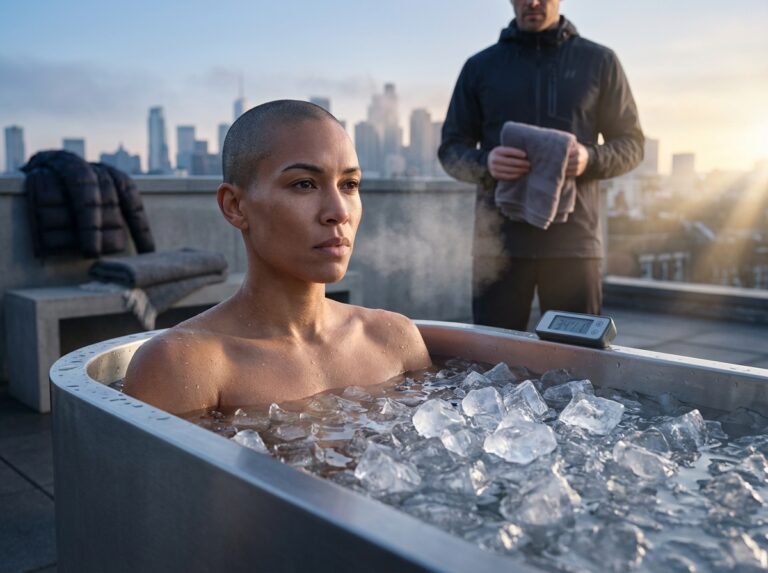
Ice baths and cold plunges are powerful recovery tools when temperature, timing, and purpose align. This article examines the physiology behind cold immersion, evidence-based temperature ranges and durations, sport-specific protocols, contrast therapy options, safety precautions, and practical implementation so coaches and athletes can optimize performance and recovery without unintended trade-offs.
Why Temperature Matters for Recovery and Performance
Water temperature is the primary variable that dictates how your body responds to a cold plunge. It is not just a matter of how uncomfortable the water feels; the specific degree of cold determines the physiological shift in your tissues and nervous system. When you submerge your body, the most immediate reaction is vasoconstriction. Your blood vessels narrow significantly, moving blood away from your skin and limbs toward your core to protect internal organs. For an athlete, this is a key mechanism for recovery as it limits the amount of fluid that builds up in muscle tissue after a hard workout. This reduction in blood flow helps control edema and keeps inflammatory markers from pooling in the extremities.
Metabolic and Nerve Responses
The cold also slows down the metabolic rate of your cells. When the temperature of the muscle tissue drops, the cells require less oxygen to function, which can prevent secondary tissue damage that often occurs after intense exercise. Beyond the metabolic shift, cold water changes how you perceive pain by slowing down nerve conduction velocity. The signals that travel from your muscles to your brain move at a slower pace, creating a natural numbing effect. It is often more effective than using a simple ice pack because water is much denser than air and pulls heat away from the body about 25 times faster. This rapid heat transfer is why a 50 degrees Fahrenheit pool feels much more intense than 50 degrees Fahrenheit air.
Cardiovascular and Sympathetic Activation
Your heart and blood pressure react instantly to the cold. When you first enter the water, you experience a sympathetic nervous system spike—the “fight or flight” response. Your heart rate increases and blood pressure rises because your peripheral resistance is higher, forcing the heart to work harder to move blood through narrowed vessels. This is why safety is so important for anyone with underlying heart conditions. Once you exit the water, your body experiences a parasympathetic rebound, shifting into a “rest and digest” state. This rebound is responsible for the feeling of calm and the improved sleep quality many people report after a plunge. You can read more about these general effects in this study on effects of cold-water immersion on health and wellbeing.
Evidence from Recent Literature
Peer-reviewed sports medicine literature through 2024 and 2025 has established clear ranges for different outcomes. For reducing delayed onset muscle soreness (DOMS), a range of 10 to 15 degrees Celsius (approximately 50 to 59 degrees Fahrenheit) is the standard and considered the sweet spot for most recovery goals. If your goal is to reduce biochemical markers like creatine kinase, slightly colder water might be more effective. Research suggests that water between 5 and 10 degrees Celsius provides a stronger effect on neuromuscular recovery. You can find more details in this paper on the impact of different doses of cold water immersion. While near-freezing plunges provide the strongest pain relief, they also carry the highest risk for cold shock and hypothermia.
| Recovery Goal | Celsius Range | Fahrenheit Range | Primary Benefit |
|---|---|---|---|
| Muscle Soreness (DOMS) | 11 to 15°C | 52 to 59°F | Reduced inflammation |
| Neuromuscular Recovery | 5 to 10°C | 41 to 50°F | Lower Creatine Kinase |
| Acute Pain Relief | Below 5°C | Below 41°F | Nerve conduction block |
| General Wellness | 15 to 18°C | 59 to 65°F | Parasympathetic rebound |
Immersion Types and Comparisons
Whole body immersion is different from localized ice or cryotherapy. When you submerge up to your neck, you maximize the surface area in contact with the water, leading to a much faster drop in core temperature than an ice pack on a single joint. Whole body cryotherapy uses air at temperatures as low as minus 110 degrees Celsius. While it is very cold, it lacks the hydrostatic pressure of water. Water pressure helps move fluid out of the limbs and back toward the heart, which is a major advantage for reducing swelling. Partial immersion, like a hip or leg plunge, is useful if you want to avoid the full systemic shock but still need to treat specific muscle groups.
The Dose Response Relationship
Colder is not always better for every goal; there is a relationship between temperature and time. If the water is very cold, you need less time to achieve a physiological effect. If the water is more moderate, you can stay in longer. For most athletes, 10 to 15 minutes at 10 to 15 degrees Celsius is the most balanced approach. If you are focused on muscle growth, you should be careful. Immediate cold exposure after a strength session can blunt the signals your muscles need to grow. In those cases, a warmer temperature or a longer delay after training is a better choice. For extreme cases like heat stroke, very cold water is necessary. You can see the protocols for this in the guide on optimizing cold-water immersion for exercise-induced hyperthermia.
Practical Monitoring and Control
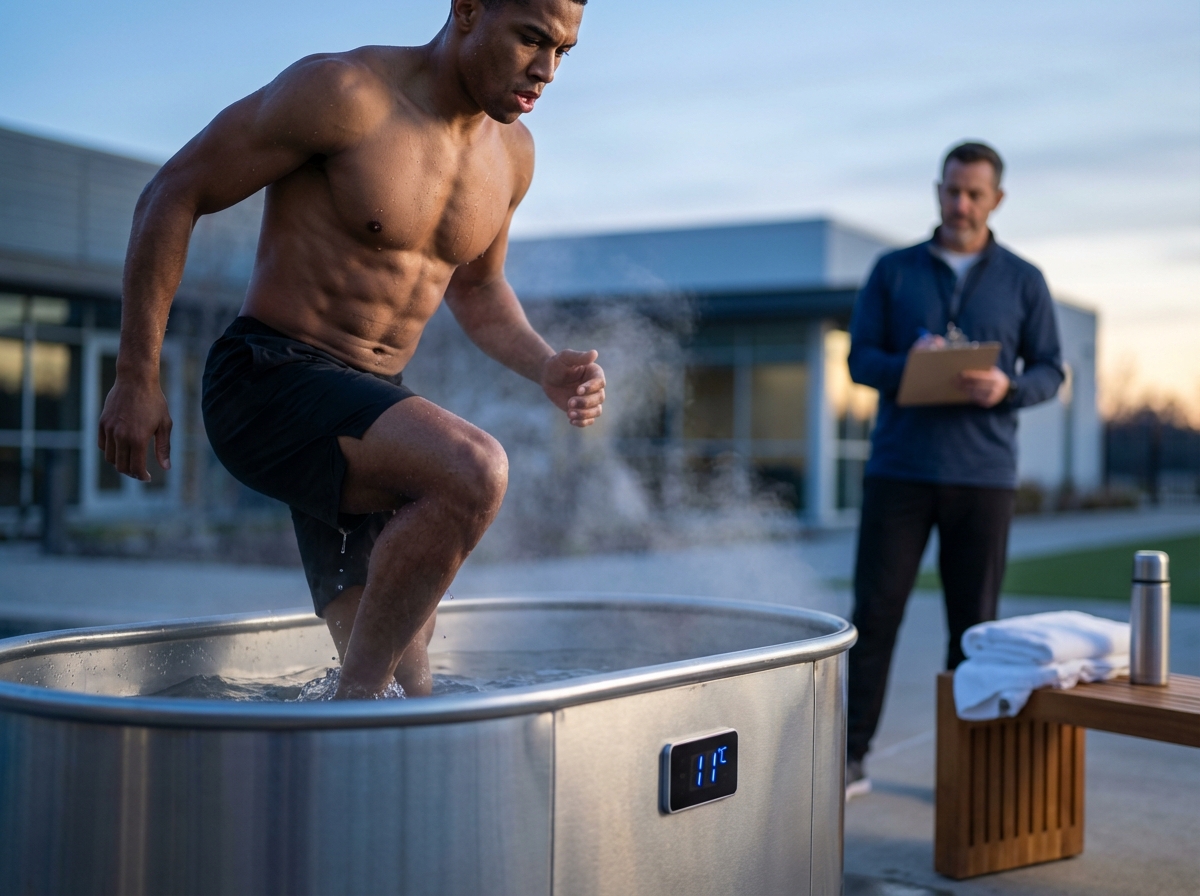
You must measure the water temperature to stay safe. Do not guess based on how it feels. Use a digital thermometer with a probe or a floating pool thermometer. Commercial cold plunge units usually have built-in sensors that are very accurate. It is a good idea to keep a session log: write down the temperature, the duration, and your rate of perceived exertion on a scale of 1 to 10. You should also pay attention to your shivering. Mild shivering is a normal thermoregulatory response, but if the shivering becomes intense or if you cannot stop it within a few minutes of getting out, the water was too cold or you stayed in too long. Always have a way to warm up quickly after your session.
Linking Temperature to Objectives
Your choice of temperature should always match your specific recovery objective. If you need acute pain relief after a high-impact event, a colder plunge for a short duration is appropriate. If you are looking for long-term adaptation, immune effects, or neurocognitive arousal, a more moderate and consistent temperature is often more effective. Understanding these mechanisms allows you to use the cold as a precise tool rather than just a test of mental toughness. The data shows that a controlled approach leads to better performance outcomes and fewer risks over time.
Ideal Temperatures, Durations, and Protocols for Different Goals and Sports
Endurance Training Protocols
For long-distance runners and cyclists, the goal is usually to limit delayed onset muscle soreness and clear metabolic waste. Research suggests a temperature range between 10 and 15 degrees Celsius (50 to 59 degrees Fahrenheit) is most effective for these athletes. You should aim for 10 to 15 minutes of immersion. This duration helps reduce creatine kinase levels, which are markers of muscle damage. It is best to get in the water within 30 minutes to two hours after your session. For immersion depth, try to reach the iliac crest or the waist to cover the primary working muscles. If you are in a high-volume training block, using this protocol two to three times per week is sufficient. (Sports Med 2019, Frontiers in Physiology 2025).
Team Sports and Repeated Sprints
Soccer, basketball, and rugby players often deal with high impact and heat strain. In these scenarios, colder water between 5 and 10 degrees Celsius (41 to 50 degrees Fahrenheit) works well for quick recovery. Shorter plunges of 5 to 10 minutes can trigger acute sympathetic responses that help with alertness and immediate perceived recovery. If you are playing multiple games in a weekend, these colder, shorter sessions help manage inflammation and edema. Deep immersion up to the neck is recommended to maximize the hydrostatic pressure effect on blood flow. (J Sports Sci 2017, Optimizing Cold-Water Immersion for Exercise-Induced Hyperthermia).
Strength and Hypertrophy Trade-offs
If your primary goal is building muscle size, you need to be careful with cold water. Immediate cold exposure after lifting can blunt the anabolic signaling pathways and reduce muscle protein synthesis. This happens because the cold reduces blood flow and suppresses the natural inflammatory response needed for growth. For strength athletes, it is better to wait at least four to six hours after training before plunging. Another option is to save the ice bath for active recovery days or deload weeks. If you must use it for pain management, keep the temperature milder at 12 to 15 degrees Celsius (54 to 59 degrees Fahrenheit) for 10 minutes. (J Appl Physiol 2018, Hot Water Immersion Better than Cold to Maintain Exercise Performance).
Combat and Contact Sports
Boxing and MMA athletes face unique challenges like blunt force trauma and joint swelling. A moderate temperature of 11 to 15 degrees Celsius (52 to 59 degrees Fahrenheit) for 10 to 12 minutes is ideal here. This range provides enough cooling to reduce pain perception without being so aggressive that it shocks the nervous system after a fight. Immersion should be as deep as possible to address full-body soreness. Using this protocol after heavy sparring sessions helps maintain joint mobility by controlling localized swelling. (Int J Sports Med 2022).
Tournament and Multi-Game Recovery
When you have to perform again within 24 hours, contrast therapy is often better than cold alone. This involves alternating between hot and cold water to create a “pump” effect in the blood vessels. This assists circulation and clears waste products without the long-term adaptation interference of deep cold. A standard sequence is three minutes in hot water at 38 to 40 degrees Celsius (100 to 104 degrees Fahrenheit) followed by one to two minutes in cold water at 10 to 15 degrees Celsius (50 to 59 degrees Fahrenheit). You should repeat this cycle three times and always finish on the cold side to keep inflammation down. (Sports Med 2020).
Mental Preparation and Alertness
Sometimes the goal is not physical recovery but mental sharpness. A very short, cold plunge can act as a powerful stimulus for the nervous system. Water at 10 degrees Celsius (50 degrees Fahrenheit) for just one to five minutes increases dopamine and norepinephrine levels. This creates a state of high alertness and focus that can last for several hours. This is useful before a competition or early in the morning to set a productive tone for the day. (Jumping into the Ice Bath Trend! Mental Health Benefits of Cold Water Immersion).
Progressive Acclimation for Beginners
If you are new to cold exposure, do not jump into near-freezing water on day one. Start with a four-week plan to build tolerance. In week one, set the water to 15 degrees Celsius (60 degrees Fahrenheit) and stay for two to three minutes. In week two, drop the temperature to 13 degrees Celsius (55 degrees Fahrenheit) for five minutes. By week three, try 11 degrees Celsius (52 degrees Fahrenheit) for eight minutes. By week four, you should be comfortable at the standard 10 degree Celsius (50 degree Fahrenheit) mark for 10 minutes. This gradual approach prevents the “cold shock” response from being overwhelming. (Cold plunge benefits: How to do it safely).
Youth and Masters Athletes
Younger athletes under 18 should use warmer temperatures, generally no lower than 12 to 14 degrees Celsius (54 to 57 degrees Fahrenheit). Their surface area to mass ratio is different, meaning they cool down much faster than adults. Masters athletes over age 50 should also stay in the 12 to 15 degree Celsius range. It is important for older athletes to monitor blood pressure, as the initial cold shock can cause a sharp spike. Always have a partner nearby for safety when working with these age groups. (Cold Plunging: Why 65°F is the Optimal Temperature for Wellness Benefits).
Travel, Altitude, and Tapering
When traveling for competition, portable tubs or hotel bathtubs with ice are common. Keep in mind that at high altitudes, your body is already under stress from lower oxygen levels. You should reduce your immersion time by 20 percent to avoid overtaxing your system. During a tapering phase before a big race, use the cold less frequently. You want your body to feel “snappy” and ready to go, and too much cold can sometimes leave muscles feeling heavy or overly relaxed. (Scan J Med Sci Sports 2019).
| Scenario | Temperature (C/F) | Duration | Frequency |
|---|---|---|---|
| Post-Match Recovery | 10-12C / 50-54F | 10 minutes | 1x daily during events |
| High Volume Training | 12-15C / 54-59F | 15 minutes | 3x per week |
| Contrast Sequence | 39C Hot / 12C Cold | 3 min Hot / 2 min Cold | 3 cycles |
| Mental Alertness | 10C / 50F | 2-5 minutes | As needed |
Common Questions and Practical Answers
What is the best water temperature for general recovery?
Most research suggests that a range between 50 and 59 degrees Fahrenheit (10 to 15 degrees Celsius) is the most effective for general recovery. This specific window helps lower muscle soreness and reduces biochemical markers of stress like creatine kinase. A 2024 systematic review found that this range provided the best balance for reducing delayed onset muscle soreness by triggering vasoconstriction, which moves blood away from the limbs to protect the core and flush metabolic waste. If you are new to this, start at 60 degrees Fahrenheit to avoid a severe cold shock response.
How long should an ice bath session last?
The ideal duration for a cold plunge is between 10 and 15 minutes. Staying in longer does not necessarily provide more benefits; in fact, cooling rates for the body tend to be most effective within the first 10 minutes of immersion. While short sessions of 30 seconds can improve mood or alertness, they are usually too brief to impact deep muscle inflammation. A study published in Frontiers in Physiology indicates that 10 to 15 minutes at moderate temperatures is best for neuromuscular recovery. Never exceed 20 minutes in water below 50 degrees Fahrenheit to prevent skin damage.
Is colder always better for recovery?
Colder water is not always superior. Very cold water below 41 degrees Fahrenheit increases the risk of hypothermia and can cause frostbite if the skin is exposed for too long. While near-freezing water provides a stronger numbing effect, it might be too stressful for the nervous system. Research shows that 50 degrees Fahrenheit is enough to achieve a 100 percent survival rate in treating heat stroke while providing excellent recovery results. Water at 2 degrees Celsius cools the body faster than water at 8 degrees Celsius, but the extra stress on the heart is often not worth the slight increase in cooling speed. Avoid going below 40 degrees Fahrenheit without professional supervision.
When should I avoid cold immersion entirely?
There are several medical reasons to skip the ice bath. People with heart conditions or high blood pressure should be very careful because the cold causes a sudden gasp reflex and puts a heavy load on the cardiovascular system. Raynaud’s disease is another contraindication, as it causes the small arteries in the fingers or toes to overreact to the cold. Pregnant women should consult their doctors before trying cold plunges. If you have open wounds or recent surgeries, the water could introduce bacteria. Always have a partner nearby if you have any underlying health concerns.
Does cold immersion hinder muscle growth or strength gains?
Evidence on this topic is quite clear for strength athletes: cold water immersion right after lifting can blunt the signals for muscle growth. It reduces the natural inflammatory response that the body uses to build new tissue. A study from 2024 suggests that hot water immersion might actually be better for maintaining muscle power after exercise. If your primary goal is hypertrophy, wait at least 4 to 6 hours after a heavy lifting session before using an ice bath, or use cold for recovery from games or endurance runs instead of pure strength workouts.
How soon after training or competition should I ice?
The timing depends on your specific sport. For endurance athletes, getting into the water within 30 minutes to 2 hours is ideal to help manage the immediate inflammation from long runs or cycling sessions. For team sports with multiple games in one weekend, immediate icing helps with subjective recovery, making the athlete feel fresher for the next round. If you are training for long-term adaptation, you might want to wait longer. Always let your heart rate return to a near-normal level before entering the water.
How often can I use ice baths in a week?
Using an ice bath 3 to 5 times per week is generally considered safe for most athletes. Daily use might be too much for some people and could interfere with the body’s ability to adapt to the stress of training. Some studies on winter swimmers show that 3 sessions per week are enough to create positive changes in the immune system. Overusing the cold can lead to a plateau in performance. Watch for signs of chronic fatigue or a constant feeling of being cold.
What is the evidence for contrast therapy versus cold only?
Contrast therapy involves switching between hot and cold water to create a “pumping” action in the blood vessels. It is very effective for reducing general muscle stiffness and improving circulation. Cold-only immersion is usually better for acute injuries or extreme heat exhaustion. A 2020 review suggests that contrast therapy is excellent for circulation and provides a more comfortable experience for many athletes. A standard protocol is 3 minutes hot at 100 degrees Fahrenheit followed by 1 minute cold at 55 degrees Fahrenheit.
How do I build a home setup and control temperature safely?
Many people use chest freezers or large stock tanks. You must ensure the setup is safe. Always unplug any electrical components before you get into the water—never use a chest freezer that is still plugged into a power outlet. Use a high-quality digital thermometer with a probe to check the temperature, as floating pool thermometers are often inaccurate. You can use ice bags to lower the temperature of a standard bathtub. Maintain the water between 50 and 59 degrees Fahrenheit for safety.
What are signs of overexposure and when should I stop?
You need to listen to your body. Mild shivering is a normal response to the cold, but violent shivering is a sign to get out. If your skin becomes extremely red, starts to feel numb, or if you experience confusion or a loss of coordination, these are serious warning signs that your core temperature is dropping too low. Exit the water immediately if you lose feeling in your fingers or toes. Warm up slowly with dry clothes and a warm drink rather than a hot shower.
Final Recommendations and Practical Implementation Plan
To build a successful cold water practice, you need to match your water temperature to your specific physiological needs. The data consistently points to moderate durations of 10 to 15 minutes at temperatures between 5°C and 15°C as the most effective window for biochemical markers like creatine kinase as well as neuromuscular recovery. If you are dealing with severe exercise-induced hyperthermia, Optimizing Cold-Water Immersion research suggests that water at 5°C to 10°C is effective for treating patients with severe cases.
Safety Checklist for Cold Immersion
Before you step into the water, you must ensure your environment and your body are ready for the stress of the cold.
Pre-Immersion Screening
Check for medical contraindications such as Raynaud’s disease, heart conditions, or uncontrolled high blood pressure. If you have any form of cardiovascular history, you must consult a doctor first. Women should consider starting at slightly warmer temperatures, between 55°F and 65°F, to mitigate initial stress responses as suggested by wellness research.
During Immersion Monitoring
Watch for cognitive changes or confusion. If you cannot answer simple questions or feel a sense of panic that does not subside after the first minute, exit the water. Shivering is a natural response, but it should remain mild. If you experience violent shivering or loss of motor control in your hands and feet, your core temperature is dropping too fast. Keep a digital thermometer in the water to ensure it does not dip below 5°C (41°F) unless you are highly acclimated.
Post-Immersion Warm Up
Do not jump into a hot shower immediately after a deep cold plunge. This can cause rapid vasodilation and a drop in blood pressure. Instead, use a light warm-up such as a 10-minute walk or basic calisthenics. Dry off quickly and put on warm layers to allow your body to return to its baseline temperature naturally.
Tracking Outcomes and Individual Response
Every athlete responds differently to the cold. To find your personal “sweet spot,” you should track your data over a 4 to 8 week period. Use a simple log to record the water temperature, the time spent submerged, and your subjective recovery metrics.
Performance Metrics
Measure your vertical jump or sprint times 24 hours after your hardest sessions. If your performance stays stable or improves with cold use, the protocol is working. If you feel sluggish or your power output drops, the water may be too cold or the duration too long.
Soreness and Sleep Scales
Rate your muscle soreness on a scale of 0 to 10 each morning. Research in Effects of cold-water immersion on health and wellbeing shows that immersions at or below 15°C for at least 30 seconds can improve sleep and fatigue. Track your total sleep hours and how rested you feel upon waking. Improvements in these areas often signal that the cold is helping your nervous system shift into a parasympathetic state.
When to Consult a Professional
If you do not see improvements in recovery after 8 weeks, or if you experience persistent joint pain and numbness, seek advice from a sports scientist. They can help tailor a program that accounts for your specific training load and metabolic rate. Medical professionals should be consulted if you experience irregular heart rhythms or chronic skin irritations from the water exposure.
Sources
- Optimizing Cold-Water Immersion for Exercise-Induced Hyperthermia — Although a water temperature of ≤5°C may not always be feasible in the field, water at 5°C to 10°C is effective in treating patients with severe cases of EHS.
- Impact of different doses of cold water immersion (duration and … — The findings indicate that MD-LT-CWI (10–15 min, 5°C–10°C) was most effective for biochemical markers (CK) and neuromuscular recovery (JUMP), …
- Jumping into the Ice Bath Trend! Mental Health Benefits of Cold … — It is generally recommended to aim for a temperature that feels uncomfortable but still safe (no colder than 10°C, 50°F). If you have any form …
- Effects of cold-water immersion on health and wellbeing – PubMed — … cold shower, ice bath, or plunge with water temperature ≤15°C for at least 30 seconds. Outcomes of interest were sleep, stress, fatigue …
- Effects of cold-water immersion on health and wellbeing — CWI interventions were performed in baths (n = 10) or showers (n = 1) at temperatures ranging from 7°C to 15°C and durations ranging from 30 seconds to 2 hours.
- Cold plunge benefits: How to do it safely | Woman's Hospital of Texas — It's a good idea to start with a warmer temperature — between 55 and 60 degrees — for your first cold plunge. You can lower the temperature as …
- Cold Plunging: Why 65°F is the Optimal Temperature for Wellness … — Research suggests that providing warmer temperatures, starting at 55°F to 65°F, for women during cold plunging can help mitigate risks and stress responses from …
- Hot Water Immersion Better than Cold to Maintain Exercise … — “The novel findings from our study are that post-exercise hot water immersion promoted recovery of muscle power output compared to post-exercise …
- Cold-water plunging health benefits – Mayo Clinic Health System — Water should be 50 F or colder. Keep in mind that the water in a frozen lake will be much colder. That's why it's a good idea to measure the …
Legal Disclaimers & Brand Notices
The information provided in this article is for informational and educational purposes only and does not constitute medical advice, diagnosis, or treatment. Always seek the advice of a physician or other qualified health provider with any questions you may have regarding a medical condition, particularly before beginning any new physical recovery protocol or cold water immersion therapy.
All product names, logos, and brands mentioned in this text are the property of their respective owners. All company, product, and service names used in this article are for identification purposes only. Use of these names, logos, and brands does not imply endorsement.